Assist
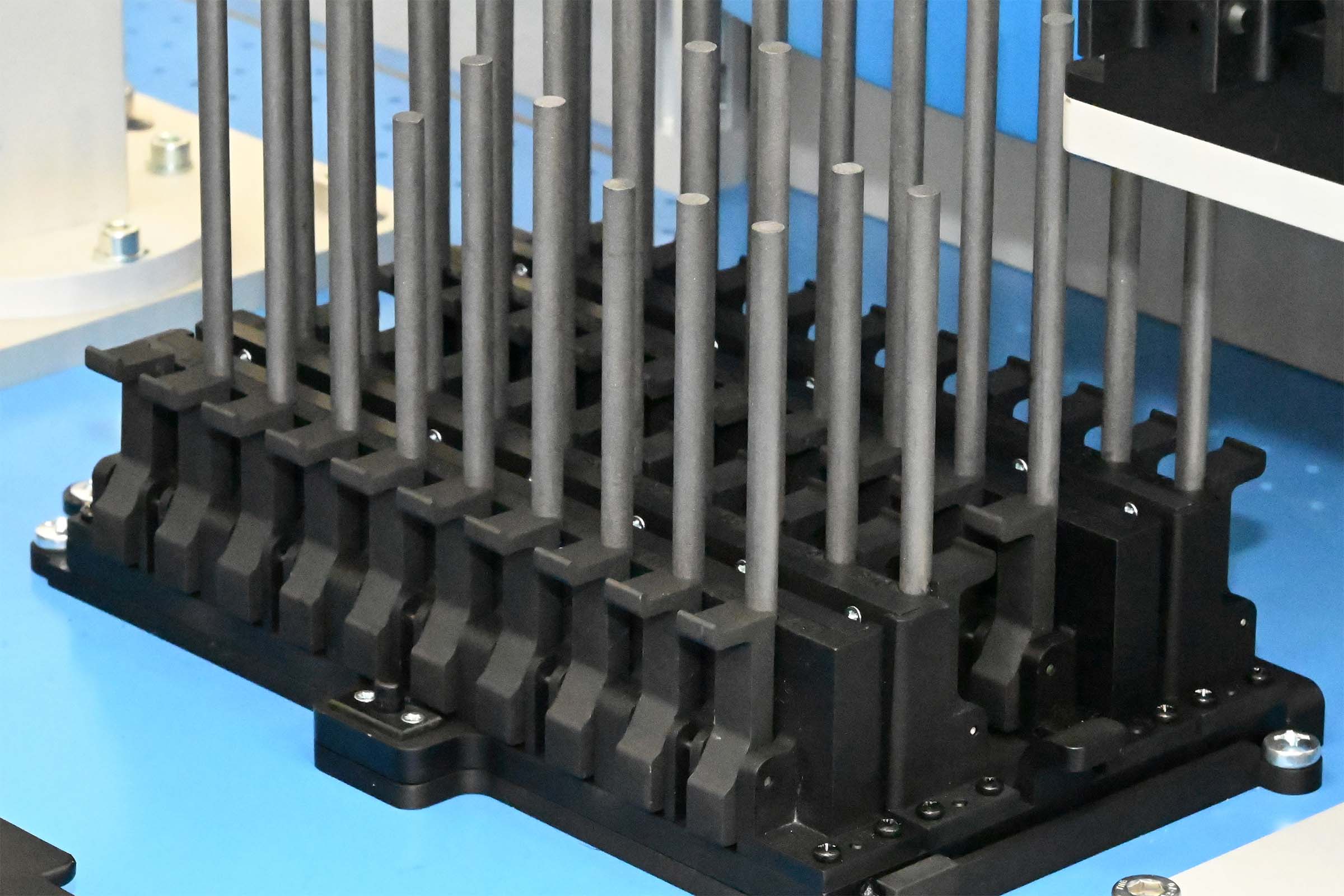
Rod dispenser
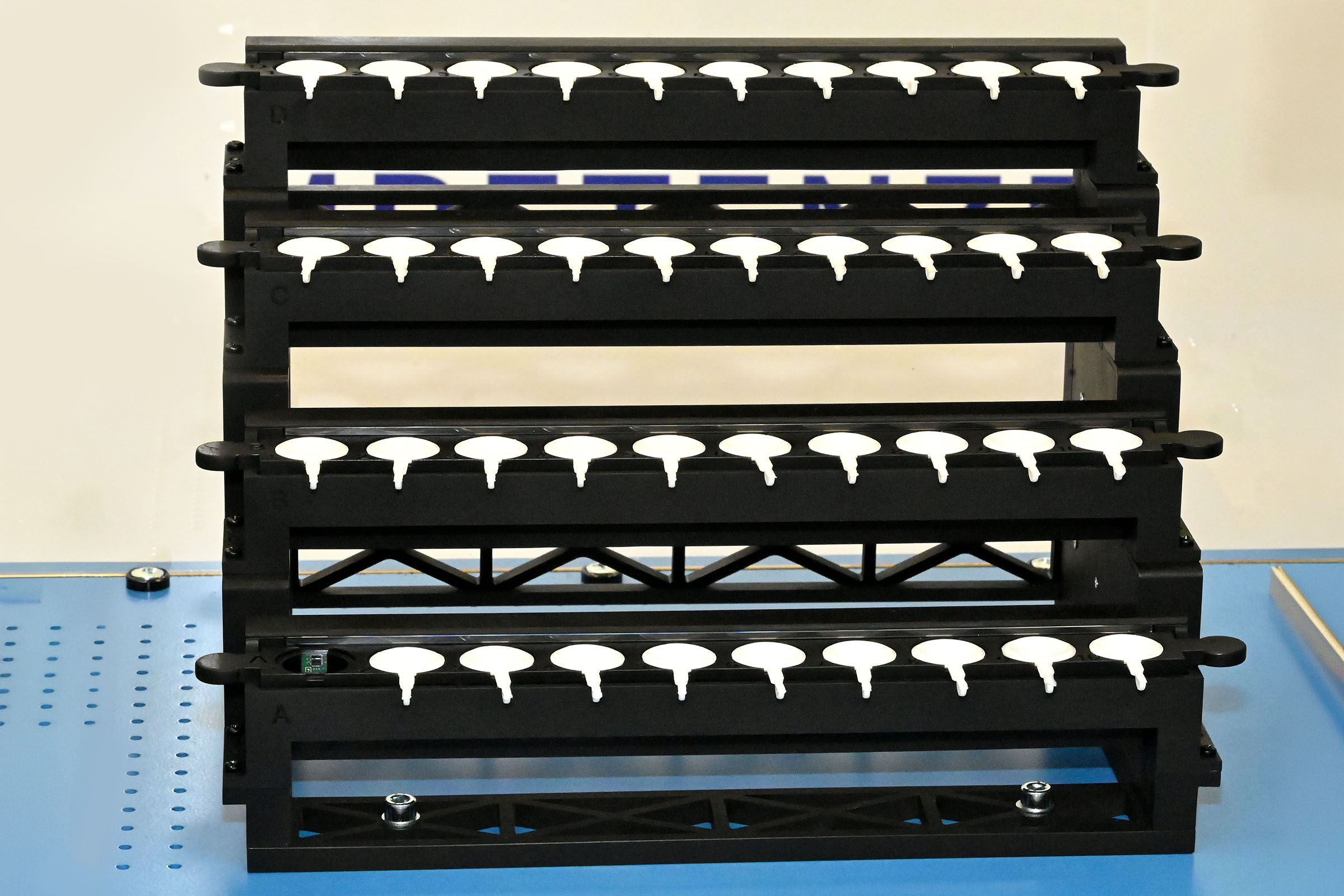
Oil sample dispenser
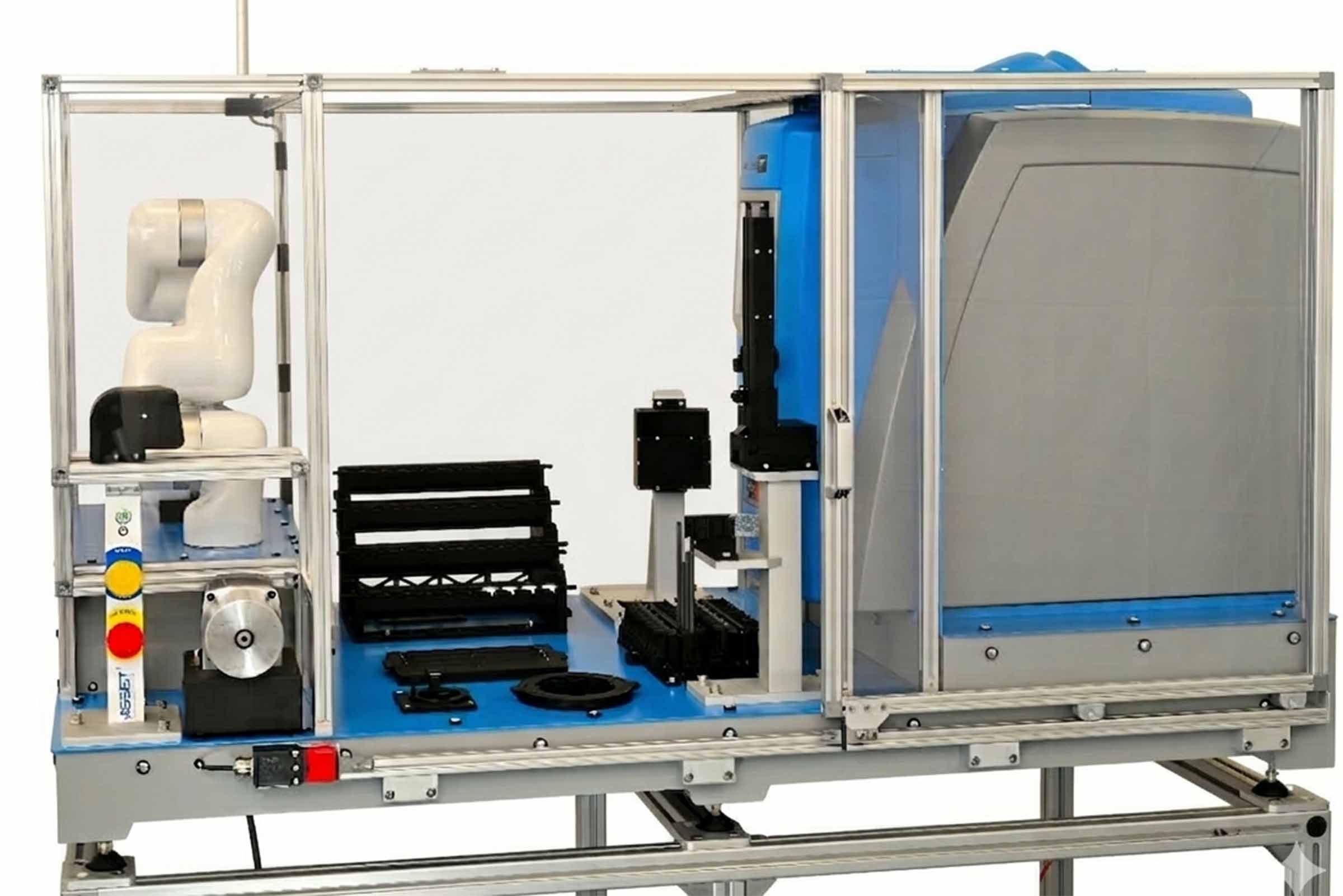
Assist autosampler
Assist is an autosampler for a laboratory instrument that performs chemical analysis of lubricating oil by using spectrometry. It is manufactured by an American company and sold under the trade name “Spectroil.”
Assist was developed for Mecoil Diagnosi Meccaniche with the aim of automating the operation of an instrument designed for human use, without making modifications to the instrument itself or the measurement process.
To perform an analysis with Spectroil, the instrument must be equipped with consumables, the oil sample must be placed in the combustion chamber, and a door must be closed. At the end of each measurement, the above steps must be performed in reverse order, properly disposing of the consumables and the remaining oil sample. These steps, due to the specific movements required, are simple for a human operator but complex to automate. For this reason, a commercial 6-degree-of-freedom robotic arm was used, attached to a specially designed metal support structure that also houses the Spectroil instrument.
The robotic arm, originally equipped with a gripper mechanism, was modified to be able to attach the tools specifically designed to perform the various operations.
All the mechanical parts needed to hold the oil samples to be analyzed and the consumables, as well as to dispose of them after use, were then designed.
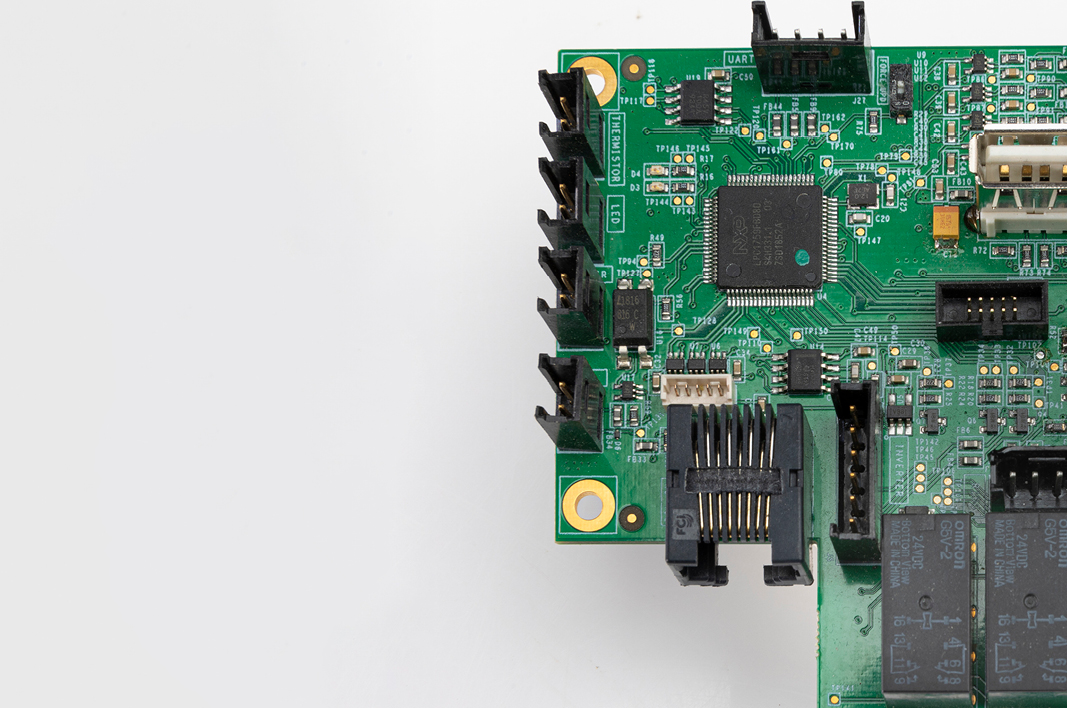
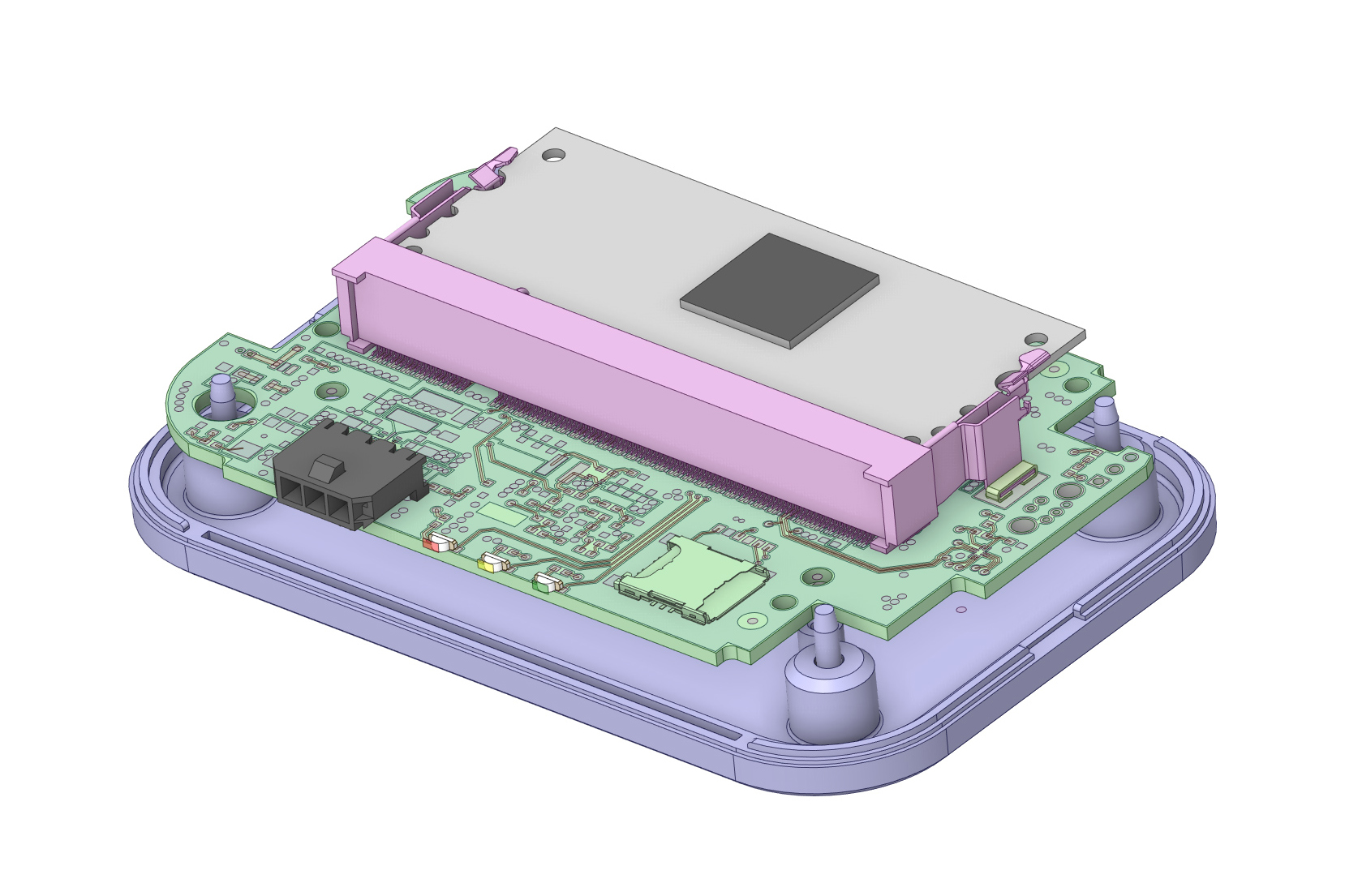
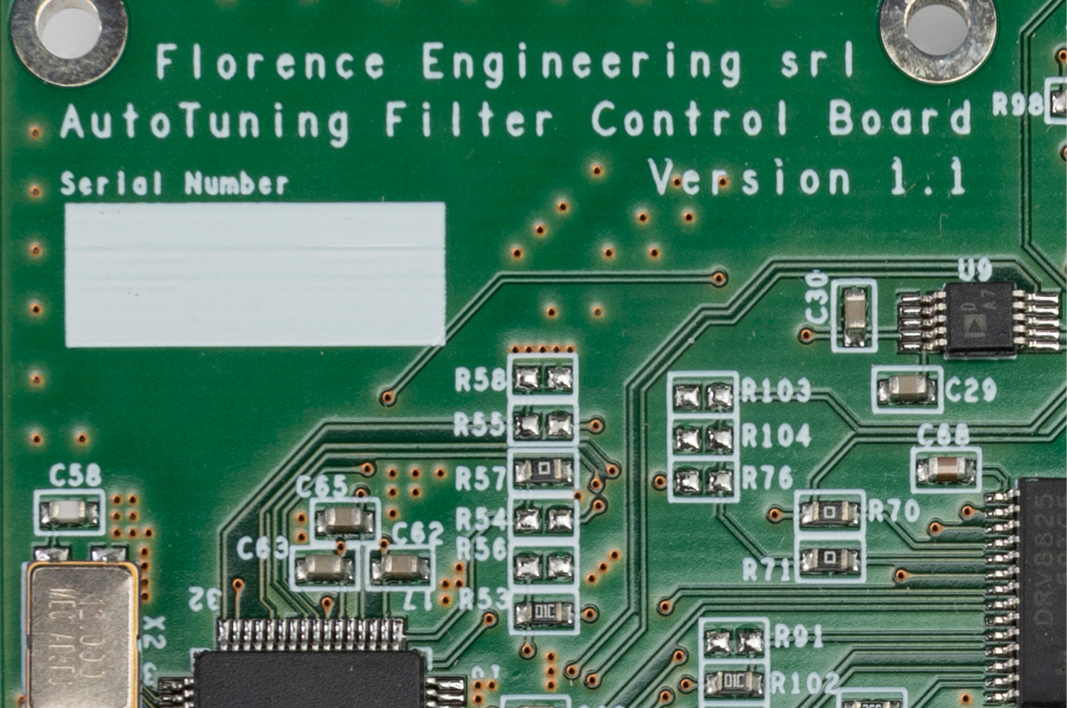
The design of mechanical and electronic parts was performed to allow the control logic to verify in real time the correct execution of all operations performed by the robotic arm, immediately intercepting any malfunctions and automatically correcting them where possible. To this end, each gripping tool and each consumable and sample dispensing station was equipped with electronic presence sensors, connected to a control board. To verify the arm’s operations on the Spectroil instrument, to which no modifications were made, a video camera was used that, thanks to AI-based algorithms, could detect the correct positioning of all the elements required for the analysis.
To control the robotic arm and manage all peripheral sensors, software was written to automatically manage all the operations required to perform batch analyses of 40 oil samples in the correct sequence.
Finally, aspects related to CE certification were addressed, according to the Machinery Directive (2006/427EC), Electromagnetic Compatibility (2014/30/EU), Low Voltage (2014/35/EU), and RoHS (2015/863/EU).
For this project, Florence Engineering was responsible for the mechanical, electrical, and electronic design, the development of the control software (back-end), certifications, and machine assembly.